The pharmaceutical industry in India has grown significantly over the years, creating new opportunities for pharmaceutical companies, distributors, marketers, startups, and healthcare businesses. One of the business models that has helped companies expand their product portfolios without establishing their own manufacturing facilities is Pharma Third Party Manufacturing.
In this model, a pharmaceutical company partners with an established manufacturing unit to produce medicines and healthcare products according to agreed specifications. The manufacturing company manages production, quality testing, packaging, and other manufacturing-related activities, while the partnering company can focus on branding, marketing, sales, and distribution.
Choosing the right Pharma Third Party Manufacturing Company is therefore an important decision for businesses that want to develop and market pharmaceutical products efficiently.
What Is Pharma Third Party Manufacturing?
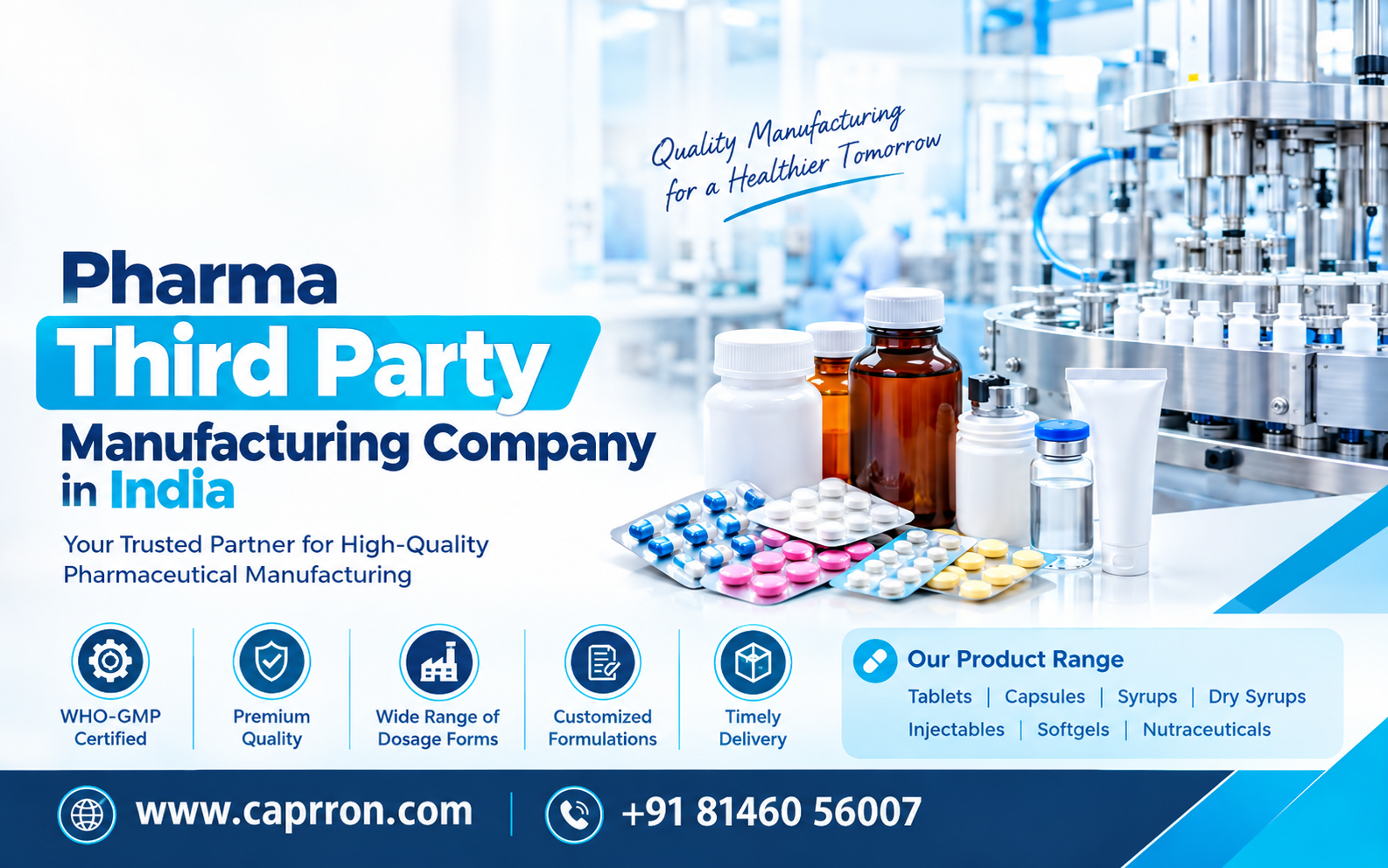
Pharma Third Party Manufacturing is a process in which a pharmaceutical company outsources the manufacturing of its products to another pharmaceutical manufacturing company.
Instead of investing in a complete manufacturing facility, expensive machinery, laboratories, production equipment, and a large technical workforce, a business can partner with an experienced manufacturer that already has the required infrastructure.
Depending on the agreement, the manufacturing company may provide services such as:
- Raw material procurement
- Product formulation
- Manufacturing and production
- Quality testing
- Batch processing
- Packaging
- Labelling
- Documentation
- Finished-product inspection
- Product dispatch
The exact services depend on the manufacturer’s capabilities and the requirements agreed upon by both parties.
Why Is Pharma Third Party Manufacturing Important in India?
India has developed a strong pharmaceutical manufacturing ecosystem supported by manufacturing facilities, technical professionals, research capabilities, and an extensive healthcare market.
For many businesses, establishing an independent pharmaceutical manufacturing facility can require considerable investment and long-term operational management. Third-party manufacturing provides an alternative by allowing businesses to utilise the infrastructure and expertise of an established manufacturer.
Some common reasons businesses choose third-party manufacturing include:
- Lower infrastructure investment
- Access to specialised manufacturing facilities
- Reduced operational responsibilities
- Product portfolio expansion
- Professional manufacturing expertise
- Quality-control support
- Flexible production options
- Packaging and labelling support
This model can be useful for established pharmaceutical companies as well as businesses entering the healthcare market for the first time.
Benefits of Choosing a Pharma Third Party Manufacturing Company
Selecting a reliable Pharma Third Party Manufacturing Company can provide several benefits to pharmaceutical businesses.
1. Reduced Infrastructure Investment
Setting up a pharmaceutical manufacturing plant requires investment in land, buildings, machinery, laboratories, utilities, technical staff, quality-control systems, and other infrastructure.
Third-party manufacturing allows a company to use an existing manufacturing facility rather than making the entire investment independently.
This can help businesses allocate more resources toward product development, branding, marketing, sales, and distribution.
2. Access to Manufacturing Expertise
An experienced manufacturer generally has trained technical professionals and established production procedures.
This expertise can be useful when manufacturing different dosage forms and managing production requirements.
Depending on the facility, manufacturing capabilities may include:
- Tablets
- Capsules
- Softgels
- Syrups
- Suspensions
- Powders
- Sachets
- Oral liquids
- Creams
- Gels
- Nutraceutical products
3. Quality Control and Testing
Quality is a critical part of pharmaceutical manufacturing. Raw materials, production processes, finished products, packaging, and documentation need to be managed through appropriate quality systems.
A professional manufacturing partner should have suitable quality-control procedures for testing and monitoring products according to applicable requirements.
Businesses should always verify the current licences, certifications, quality standards, and regulatory permissions of a manufacturer before entering into a manufacturing agreement.
4. Product Portfolio Expansion
Third-party manufacturing can make it easier for pharmaceutical businesses to introduce additional products.
Instead of establishing separate production capabilities for every dosage form, a company can work with a manufacturer that already has suitable infrastructure.
This can allow businesses to expand into categories such as:
- Pharmaceutical tablets
- Hard capsules
- Softgel capsules
- Oral liquids
- Syrups
- Powders
- Nutraceutical products
- Health supplements
- Topical formulations
5. Focus on Marketing and Sales
Manufacturing involves several technical and operational activities. By outsourcing production, the pharmaceutical company can focus more strongly on:
- Brand building
- Marketing
- Distribution
- Sales
- Customer relationships
- Market research
- Business expansion
This division of responsibilities can help companies manage their business activities more efficiently.
How Does Pharma Third Party Manufacturing Work?
The process can differ between manufacturers, but a typical third-party pharmaceutical manufacturing process generally involves the following steps.
Step 1: Select the Products
The business first decides which pharmaceutical or healthcare products it wants to manufacture.
Product selection may depend on market demand, target customers, therapeutic categories, dosage forms, and business objectives.
Step 2: Discuss Product Requirements
The company then discusses the product specifications with the manufacturer.
Important requirements may include:
- Product composition
- Dosage form
- Strength
- Packaging
- Quantity
- Branding
- Labelling
- Delivery requirements
- Documentation
Step 3: Product Development and Sampling
If required, the manufacturer may provide samples or assist with product development.
Samples can help the business evaluate the product before moving to commercial production.
Step 4: Manufacturing
Once the product specifications are finalised, commercial production begins according to the agreed manufacturing procedures.
The production process should be carried out under controlled conditions with appropriate quality checks.
Step 5: Quality Testing
The manufactured batch is subjected to relevant quality checks and testing before it is released.
The specific testing requirements depend on the product, formulation, specifications, and applicable regulatory requirements.
Step 6: Packaging and Labelling
After manufacturing and quality checks, the products are packed and labelled according to the agreed requirements.
Packaging may include:
- Blister packs
- Bottles
- Cartons
- Sachets
- Tubes
- Jars
- Other suitable packaging formats
Step 7: Product Dispatch
After completion of the required manufacturing, testing, packaging, and documentation processes, the finished products are prepared for dispatch.
The delivery process depends on the manufacturer’s arrangements and the agreement with the client.
Important Factors to Consider When Choosing a Pharma Manufacturer
Choosing a manufacturing partner requires careful research. Businesses should consider more than just manufacturing prices.
Before selecting a Pharma Third Party Manufacturing Company, evaluate the following factors:
- Manufacturing infrastructure
- Applicable licences
- Certifications
- Quality-control systems
- Product portfolio
- Manufacturing capacity
- Technical expertise
- Research and development capabilities
- Packaging options
- Minimum order quantity
- Documentation support
- Production timelines
- Delivery capabilities
- Customer support
- Communication process
A proper evaluation can help businesses select a manufacturing partner that matches their product and commercial requirements.
Quality Standards in Pharma Third Party Manufacturing
Quality assurance is one of the most important aspects of pharmaceutical production.
A professional pharmaceutical manufacturing facility should have appropriate systems for:
- Raw material handling
- Raw material testing
- Production monitoring
- In-process quality checks
- Finished-product testing
- Documentation
- Packaging controls
- Storage
- Batch management
Businesses should verify the manufacturer’s current certifications, licences, approvals, and manufacturing permissions relevant to the products they intend to manufacture.
Quality systems should also be reviewed according to the applicable regulatory requirements for the intended market.
Importance of Packaging in Pharmaceutical Manufacturing
Packaging plays an important role in protecting pharmaceutical products and communicating product information.
The packaging format depends on the product and its characteristics. Common pharmaceutical packaging options include:
- Blister packaging
- Strip packaging
- Bottles
- Cartons
- Sachets
- Tubes
- Jars
Good packaging should protect the product during storage and transportation while also providing required product information.
Businesses should ensure that packaging and labelling requirements are discussed clearly with the manufacturing partner before production begins.
Pharma and Nutraceutical Third Party Manufacturing
The pharmaceutical and nutraceutical industries have different product categories and regulatory requirements.
Pharmaceutical products are generally associated with medicines and therapeutic applications, while nutraceutical products are developed for nutritional and health-support purposes under their applicable regulatory framework.
Businesses interested in expanding their healthcare portfolio may therefore consider working with a Nutraceutical Manufacturer India alongside pharmaceutical manufacturing partners.
Depending on the manufacturer’s infrastructure, nutraceutical products may include:
- Nutraceutical tablets
- Hard capsules
- Softgels
- Powders
- Sachets
- Gummies
- Oral liquids
- Health supplements
A manufacturer offering both pharmaceutical and nutraceutical capabilities can potentially support businesses seeking to develop products across multiple healthcare categories.
Common Products Manufactured Through Third Party Pharma Manufacturing
The exact product range depends on the manufacturing facility, formulation requirements, and applicable permissions.
Common pharmaceutical dosage forms include:
Tablets
Tablets are one of the most widely used pharmaceutical dosage forms. They can be manufactured in different strengths and formulations according to product requirements.
Capsules
Hard capsules are another common dosage form used for a wide range of pharmaceutical formulations.
Softgels
Softgel capsules are commonly used for formulations containing oils, vitamins, nutrients, and other suitable ingredients.
Syrups and Oral Liquids
Liquid formulations can be developed for products where an oral liquid dosage form is appropriate.
Powders and Sachets
Powders and sachets can be used for pharmaceutical, nutritional, and health-support formulations depending on the product requirements.
Topical Products
Depending on the manufacturing facility, products such as creams and gels may also be available.
Key Benefits of Pharma Third Party Manufacturing
The major benefits of third-party pharmaceutical manufacturing include:
- Reduced requirement for manufacturing infrastructure
- Access to established manufacturing facilities
- Professional technical expertise
- Quality-control support
- Product portfolio expansion
- Multiple dosage-form options
- Packaging and labelling support
- Reduced operational complexity
- Greater focus on sales and marketing
- Flexible manufacturing arrangements
- Potential support for customised products
- Opportunities to enter new healthcare categories
How to Build a Successful Third Party Manufacturing Partnership
A successful manufacturing partnership depends on clear communication, proper planning, and clearly defined responsibilities.
Before beginning production, both parties should discuss and document important details such as:
- Product specifications
- Composition
- Quantity
- Packaging
- Labelling
- Quality requirements
- Delivery schedule
- Payment terms
- Documentation
- Manufacturing responsibilities
- Regulatory responsibilities
Regular communication can help reduce misunderstandings and improve coordination during product development and production.
Businesses should also conduct appropriate due diligence before selecting a manufacturing partner.
Why Choose an Experienced Pharma Manufacturing Partner?
Pharmaceutical manufacturing involves multiple technical, quality, and operational processes. An experienced manufacturing company may already have established systems for production planning, quality control, raw-material management, packaging, testing, documentation, and dispatch.
When evaluating a manufacturer, businesses should look at its infrastructure, manufacturing capabilities, product portfolio, quality systems, regulatory documentation, and experience with the specific products they want to manufacture.
Caprron Healthcare provides pharmaceutical and nutraceutical manufacturing solutions and information about its manufacturing capabilities through its official website.
Frequently Asked Questions About Pharma Third Party Manufacturing
What is Pharma Third Party Manufacturing?
Pharma Third Party Manufacturing is a business arrangement in which a pharmaceutical company outsources the production of its products to an established pharmaceutical manufacturer. The manufacturer handles agreed production activities while the client company can focus on branding, marketing, sales, and distribution.
What are the main benefits of third-party pharmaceutical manufacturing?
The main benefits can include reduced infrastructure investment, access to established manufacturing facilities, technical expertise, quality-control systems, product portfolio expansion, and reduced manufacturing responsibilities.
How can I choose a Pharma Third Party Manufacturing Company?
Consider the manufacturer’s infrastructure, applicable licences, certifications, quality systems, manufacturing capacity, product range, technical expertise, packaging options, minimum order requirements, documentation, production timelines, and delivery capabilities.
Can third-party manufacturers provide customised pharmaceutical products?
Some manufacturers offer product development and customised formulation services. Availability depends on their technical capabilities, infrastructure, product category, and applicable regulatory permissions.
Can nutraceutical products be manufactured through third-party manufacturing?
Yes. Businesses can work with a Nutraceutical Manufacturer India for products such as tablets, capsules, powders, softgels, gummies, and other health-support formulations, subject to applicable regulatory requirements and manufacturing permissions.
What pharmaceutical products can be manufactured through third-party manufacturing?
Depending on the manufacturer’s capabilities and permissions, products may include tablets, capsules, softgels, syrups, oral liquids, powders, topical products, and other pharmaceutical dosage forms.
Is third-party manufacturing suitable for new pharmaceutical businesses?
Third-party manufacturing can provide a way for businesses to access established production infrastructure without setting up their own manufacturing facility. Businesses should evaluate costs, product requirements, regulatory responsibilities, manufacturing capabilities, and commercial objectives before entering into an agreement.
Conclusion
Pharma Third Party Manufacturing provides a practical manufacturing model for pharmaceutical companies, distributors, marketers, startups, and healthcare businesses that want to develop and market products without establishing their own complete manufacturing infrastructure.
By working with a suitable Pharma Third Party Manufacturing Company, businesses can gain access to manufacturing facilities, technical expertise, quality-control processes, packaging capabilities, and different dosage-form options.
However, selecting a manufacturing partner should involve careful evaluation of manufacturing infrastructure, quality systems, applicable licences, certifications, product capabilities, documentation, production capacity, packaging, delivery schedules, and communication.
Businesses looking to expand beyond pharmaceutical products can also explore opportunities with a Nutraceutical Manufacturer India for suitable nutritional and wellness products.
For more information about pharmaceutical and nutraceutical manufacturing services, visit:
Caprron Healthcare: http://caprron.com/